Most offices run efficiently right up to the minute something fails. Smoke alarm are mischievous, sprinkle leakages hide in ceilings, forklifts clip shelfs, lithium batteries vent, tornados reduced power. When the common turns laterally, people try to find leadership. A resistant Emergency Control Organisation, or ECO, gives that leadership shape. It sets duties, signals, and tried and tested regimens so average team can act decisively under stress and anxiety. The distinction between a secure, organized discharge and a confused shuffle commonly boils down to whether wardens have trained with each other, drilled the website, and recognized their legal duties.
This post distills practical lessons from running warden programs across workplaces, warehouses, laboratories, health care, retail, and mixed-use towers. It also explains exactly how country wide recognised systems like PUAER005 and PUAER006 equate into everyday ability, and why the small information - from radio technique to hat colours - are not facts however tools.
What an ECO really does
An ECO is not a board that meets annually. It is a functional group developed to regulate an emergency situation up until the situation is dealt with or the event is handed over to emergency services. Its objective is to shield life first, after that building and company continuity. In practice that indicates increasing the alarm system, confirming conditions, collaborating discharge or sanctuary in place, helping individuals who need support, managing communications with building management and 000, and accounting for people.
During a multi-tenant building fire in Parramatta a number of years earlier, four floor wardens came to their fire indication panel prior to Safety and security got there. They really did not attempt to be heroes, they did precisely what training educated: examine the revealed area, send out a warden pair to confirm, begin a presented discharge from the fire floor and those directly above, and keep the public address clear for directions. When Fire and Rescue NSW got here, the Chief Warden passed a short, organized short. The crew located and tore down a tiny electrical fire in a duct prior to it spread. Order, not luck, maintained people calm and stayed clear of a building-wide run for the stairs.
Roles, responsibilities, and how they work together
An excellent ECO mirrors occurrence command in straightforward form. It assigns authority, uses usual language, and builds redundancy to make sure that if a single person is away, an additional can tip in.
Chief Warden. The on-scene leader during an emergency situation. They control the response, choose based on available information, and liaise with emergency situation solutions. In multi-building or university environments, a Site Chief Warden collaborates several building Chief Wardens.
Deputy Chief Warden. 2nd in command, prepared to take control of if the Chief is unavailable or slowed down in intermediary tasks. In bigger sites the Replacement commonly handles interactions and condition boards.
Communications Officer. Runs the emergency phone, two-way radios, PA statements, and message logging. Clear radio protocol is their domain name. When this duty is proficient, the entire ECO sounds competent.
Floor or Location Wardens. Control their areas. They move locations, direct residents to departures, close doors to restrict smoke, and record standing. In complicated websites, location wardens might cover labs, high bays, or secure zones with one-of-a-kind hazards.
Wardens for individuals requiring help. Occasionally they are traditional wardens, often dedicated support. They make certain pre-planned personal emergency evacuation plans are activated which refuge factors, discharge chairs, or alternate courses are utilized as needed.
First aiders. Not automatically component of the ECO, yet their combination matters. In an actual occasion, a First Aid Organizer need to function close to the Chief Warden to triage and track injuries.
There is no alternative to clarity of authority. If people say at the fire indicator panel regarding whether to evacuate, you do not have an ECO, you have a club. Great programs create a straightforward choice ladder and pierce it up until it really feels routine.
The training map: PUAER005 and PUAER006
Australia's proficiency structure supplies a valuable backbone.
PUAER005 run as part of an emergency control organisation concentrates on the wardens that carry out plans. A solid puafer005 course constructs abilities in alarm system recognition, risk evaluation at the door, emptying strategies, search patterns, aiding individuals with special needs, and working to the Chief Warden's direction. It likewise covers fire warden training requirements like connecting through radios, recognizing structure fire safety features, and applying neighborhood treatments. The phrase puafer005 operate as part of an emergency control organisation is literal. It presumes team effort, not heroics.
PUAER006 lead an emergency situation control organisation is the chief degree unit. A great puafer006 course instructs choice making under unpredictability, incident size-up, source deployment, and liaison with emergency solutions. It consists of just how to craft clear public address messages, just how to handle clashing info, and how to transition from alarm system to incident control without panic. For those entering chief fire warden training, importance of chief wardens puafer006 lead an emergency control organisation connects the intend on paper to a real-time, relocating incident.
Both systems gain from site-specific overlays. A circulation centre with high-rack storage, battery-powered tools, and outside lawn threats requires a different focus than a center with oxygen and susceptible people. The very best warden training takes the nationwide proficiency and marries it to the structure's systems, risks, and culture.
Fire warden training that moves beyond slides
Too numerous programs rely upon a lengthy slide deck and a multiple-choice quiz. That approach misreads. Efficient fire warden training begins in the structure. Individuals learn where the leave doors in fact are, which ones available to staircases, which open up to a laneway, which are upset, and which have a postponed egress. They stand at the fire indication panel and decode an area summary. They deal with the radios, discover the battery back-up, and discover how to silence a mistake tone without silencing an alarm.
Practical scenarios offer muscular tissue memory. For instance, an exercise might imitate a smoke alarm activation in a level 3 kitchen, with smell of salute yet no noticeable smoke. The goal is to verify the alarm, control the public address to make sure that owners do not ignore it, and either reset or leave based upon searchings for. One more scenario could entail a forklift effect in a storage facility aisle and a believed fuel leak. Here, wardens learn to separate the location, restrict ignition resources, and move staff to a safe setting up point without blocking the primary gain access to for participating in crews.
It deserves including brief components that commonly fall between the cracks. Radio self-control is one. A lot of ECOs fall apart since several people key up at the same time. Educate a straightforward format. Identify on your own, who the message is for, where you are, what you see, what you require. Show brevity and the worth of silence while someone is explaining conditions. Instruct the habit of repeating critical messages once for clarity.
What the hats and headgears mean
Colours offer an objective. In a group, clear aesthetic signs help. In Australia, white identifies the Chief Warden, and red identifies wardens. So if you are asked what colour helmet does a chief warden wear, or the chief warden hat colour in a functional feeling, the solution is white. A chief fire warden hat colour that varies is normally a site-specific variation in a special context, but basic method is white for principal, red for wardens. Some sites use yellow for interactions, green for initial aiders, and blue for health and wellness reps, though those duties do not change warden duties.
The factor is not spectacle. It is feature. When 2 firemans get here and ask who is in charge, the white chief warden hat puncture the noise. When a flooring warden opens up a stair door and marshals web traffic, the red cap states authority. Throughout drills, motivate wardens to place the hat on as soon as they assume the role, not five minutes later on at the assembly point.
Fire warden needs in the workplace
The form of an ECO relies on the structure size, threat profile, resident mix, and hours of procedure. Offices with 200 team need a Chief Warden, Deputy, at the very least one Communications Officer, and flooring wardens to keep the ratio practical, generally one per 20 to 30 individuals relying on layout. Websites with high-risk areas - laboratories, gas shops, battery rooms, kitchens with gas, or aged care wings - need added wardens with area-specific training.
Fire warden needs additionally consist of currency. People relocate work. A training document that looked healthy and balanced six months back may not survive a round of promotions. Set a system to inspect availability and protection monthly, not every year. If your roster shows 2 wardens for level 5 but both work crossbreed and are hardly ever on the very same days, you have a void. Fix it with alternates, coverage from surrounding floorings, or shift-based assignments.
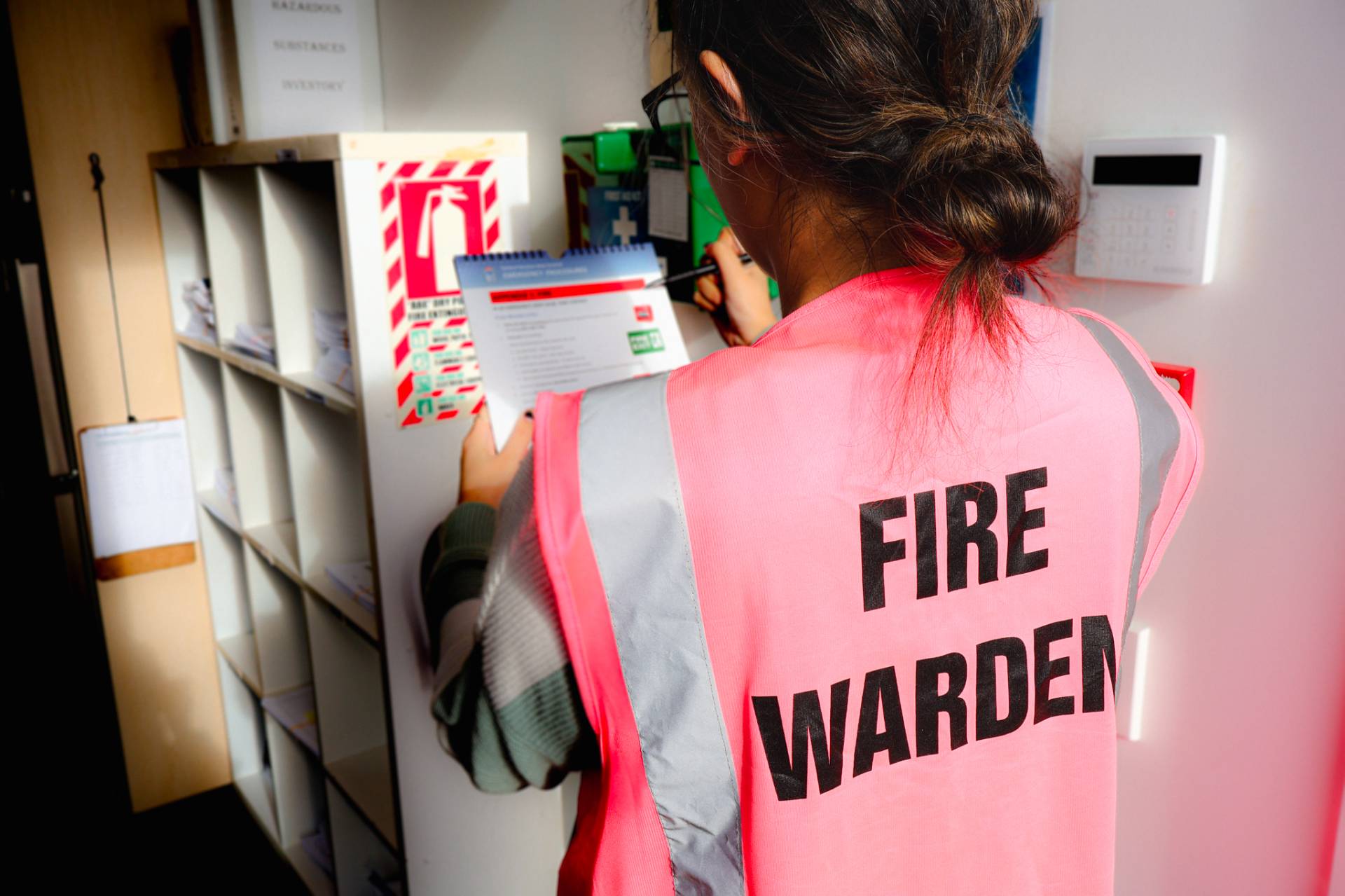
If your office spans weekends and evenings, bear in mind that the ECO clock measures in hours, not headcount. A quiet Saturday retail shift still needs an emergency warden with tricks, radio, and alarm gain access to. Where this is not viable, secure down the locations that can not be sustained and document the after-hours procedure so protection specialists recognize specifically that to call.
Chief warden duties that matter when it is messy
Leadership looks various in a hallway packed with smoke than in a boardroom. A Chief Warden's task is to streamline choices for others and keep the system relocating. That begins with the first minute.
Start with size-up. What does the panel say, and what does a human being see? Alarm types matter - smoke near a kitchen is various from a warm detector in a plant area. Time of day matters - 10 get on a Tuesday is not the same as 6 pm on a Friday. If you can not verify problems promptly, treat the alarm system as genuine and escalate.
Coordinate making use of the smallest variety of messages that give the biggest result. As an example: "All wardens, this is Chief. Level 4 area 6 alarm energetic. Degree 4 wardens validate. Degree 3 and 5 prepare to leave. Communications, chief fire warden hold PA until confirmation then introduce." As soon as you dedicate to evacuate, dedicate completely. Half steps create people to think twice in doorways.
Manage the setting up point, not simply the building. If your setting up point is revealed to summertime heat or winter months rainfall, make a backup plan with sheltered choices. Keep roll calls easy. Use checklists by area or team and accept that perfection is unrealistic in the very first 10 minutes. The action of a good chief fire warden is not a neat spreadsheet, it is a procedure that obtains people to safety and offers responding staffs a meaningful brief.
Finally, handover cleanly. When emergency situation solutions show up, the chief emergency warden should supply place, kind of alarm, actions taken, people unaccounted for, risks on website, and any kind of keys, plans, or swipe access. After that step back, maintain the ECO in assistance mode, and prepare to handle re-entry or extended disruption.
The curriculum for a resilient program
A rounded warden course ought to deliver a couple of core competencies that hold under pressure. The puafer005 course develops the bedrock for wardens, and a chief warden course or chief fire warden course includes the management layer tied to puafer006. Whether you run a solitary emergency warden course or split it, see to it the adhering to proficiencies are really practiced, not just explained:
- Familiarity with the building's fire detection and reductions systems, consisting of the fire sign panel, warden intercom phones where mounted, sprinkler valves, fire doors, stairway pressurisation, and emergency lighting. Movement and control under stress: how to sweep a location rapidly without missing little spaces, exactly how to close doors to consist of smoke, how to keep individuals relocating stairways without traffic jams, and just how to use sanctuary points and evacuation aids. Communication technique: radio methods, news, escalation activates, and just how to log and communicate details without slowing the response. Assistance preparation: pre-identified individuals who need help, evacuation chair use, bariatric considerations, and options when lifts can not be used. Decision making: alarm system confirmation, requirements for shelter in place versus discharge, and when to hand control to the fire brigade without attempting to solve borderline cases.
Those five locations cover most real-world challenges. If one is weak, your ECO will lean tough on good luck when the alarm sounds.
Drills that instruct more than compliance
Annual drills satisfy a minimum need, yet regularity alone does not guarantee knowing. A drill that teaches must shock simply enough to disclose weak spots, yet not a lot that people mistrust the system. Mix kinds. Run an arranged evacuation with full guidelines so brand-new team find out the baseline. After that run a verification drill where wardens must investigate a solitary activated area without leaving the whole structure. Occasionally add a problem, such as an obstructed stairway or a warden "not available," to check redundancy.
Debrief instantly and quickly. 2 questions are enough to begin: What helped? What reduced us down? Capture truths. If Stair B was secured on degree 2 and postponed egress had not been overriding, log it as a centers action, not a human failure. If 2 radios can not reach the basement plant room, test coverage and take into consideration a repeater or repositioned antenna.

Metrics include discipline. Track time to very first warden arrival at the panel, time to confirmation, time to initial PA, and time to all-clear at the assembly point. You do not require millisecond accuracy. A stopwatch and a note suffice. Improvement over three drills informs you whether training is turning into capability.
Edge cases and judgment calls
Real cases seldom match the book. Here are scenarios where judgment matters.
False alarm exhaustion. Kitchens activate problem smoke alarms. Staff learn that nothing poor occurs when the alarm system sounds, and conformity wears down. Counter this by transforming the pattern of response. If a cooking area alarm activates two times in a month, escalate the next one to a partial evacuation and send out a message to the whole flooring reminding them there is no such thing as a harmless alarm system. Get centers to take care of air movement or toaster oven placement. Society changes when the pattern shifts.
Shelter in position. Not every occurrence requires emptying. A gas leak outside the structure, a fierce culprit incident, or airborne irritants in the street warrant keeping people indoors, closing fresh air consumption if you control them, and limiting motion. Teach wardens to acknowledge these situations and to deliver calm, certain directions over the PA. Evacuating right into a threat is even worse than waiting five mins in a well-known environment.
Persons requiring assistance. A one-size plan stops working below. Deal with people to build individual emergency situation emptying plans. Examination discharge chairs on the actual stairs, not a training space. Learn just how to move with self-respect and safety and security. Never prepare to depend on firemans to bring individuals unless the building's fire isolated lifts are developed for use under emergency situation control and you have a worked with procedure.
After-hours alarm systems. If your building is staffed by a solitary security personnel or a skeleton staff, create a treatment that equips them. Make sure they have tricks, phone numbers for wardens on-call, and authority to leave or call 000 without waiting on consent from a manager.

Hazardous procedures. Laboratories with class 3 or 4 risks, battery energy storage systems, or data centres with tidy agent reductions all change the playbook. A warden entering an area with a tidy representative discharge have to comprehend that a covered area may be oxygen diminished. Train for door checks, signs recognition, and hold points.
Building the pipe: from volunteer to relied on leader
Volunteers make ECOs feasible, but volunteers need treatment. Stay clear of the timeless blunder of designating the most enthusiastic individual as Chief Warden without support. Develop progression. Begin with a warden course that aligns with puafer005. Allow brand-new wardens trail experienced ones during a drill. Identify 2 or 3 with the temperament for command - calm voice, quick synthesis, no ego - and placed them via chief warden training straightened to puafer006. Match them with an advisor for the first year.
Recognition issues. Not everyone desires a badge, but the majority of value recommendation when a drill works out or an actual occurrence is taken care of with grace. Keep the workload realistic. If wardens invest more time nagging about messy leaves than training for emergencies, they will certainly stress out. Change conformity tasks to centers and security groups so the ECO trains for the work it owns.
Documentation that breathes
Plans help just if people read and utilize them. Keep your emergency treatments functional and short. The full emergency plan can being in a binder for auditors, but wardens require a fast recommendation - 1 or 2 web pages with roles, radio networks, panel area, alarm types, assembly points, and choice triggers. Laminate duplicates near the panel and in warden kits. Keep an electronic version on the intranet and on the tools used by the Communications Officer.
For multi-site organisations, standardise structure but localise content. A retail chain can use the same ECO structure throughout stores, however each shop's design and emptying courses should specify. Make upgrading very easy. After a repair that alters an exit, update the plan the same week, not in the next annual review.
Working well with emergency situation services
Firefighters enjoy a well-briefed site. When teams show up and locate a calm Chief Warden, a published strategy that mirrors the structure, keys that match doors, and a list of unaccounted persons, they breathe simpler. Excellent connections start prior to the emergency. Invite the local station to stroll the site annually, especially after major adjustments. Program them the plant room, the lawn sprinkler seclusion shutoffs, the battery area, the roofing system accessibility, and the area where forklifts park and cost. Ask what would certainly aid them if they needed to attend in the evening with only a security personnel on site.
Your ECO ought to likewise recognize what not to do. Do not reset the panel mid-incident to see if the fault gets rid of. Do not silence alarm systems for comfort unless the Chief Warden has actually established it is secure and essential for communications. Do not keep people in the lobby while you choose what to do. Either return them to their floors or move them to the setting up point.
The hat colour inquiry, and other straightforward signals
People commonly ask about fire warden hat colour because straightforward, visible cues work. As discussed, white indicates the Chief Warden. Red indicates wardens. If your website uses extra colours, release them where everybody can see and maintain the combination tiny. Greater than 3 or 4 colours breeds complication. When you run chief warden training, include a short workout where wardens don their hats right now of activation and stand in a noticeable rally factor. That small ritual decreases the moment invested searching for leaders.
Putting it with each other on a genuine day
Picture a normal weekday. A smell of smoke on degree 6, alarm activates: smoke alarm in area 6. The Chief Warden recognizes the alarm system, radios Level 6 wardens to confirm, and cues the Communications Police officer to prep a holding message. Within ninety secs, the validating warden reports light smoke in a kitchen space, no flames, likely microwave event. The Principal orders Level 6 evacuated, instructs Degree 5 to prepare to move, and sends a warden pair with an extinguisher and a thermal scanner, if offered. The Communications Police officer makes a tranquil PA. Safety and security closes down air handling to level 6 to quit spread. The microwave is unplugged, fire covering is made use of to smother the resource, smoke removes. Fire and Rescue NSW are required safety and security confirmation because smoke existed. Wardens keep people off level 6 up until the crew gets here and aerates the area. Re-entry is staged floor by flooring. Later that day, the Chief Warden sends a brief debrief with two actions: kitchen area signs upgraded, and a suggestion that food must not be left ignored. That is an ECO functioning the method it should.
Where to from here
If you have no ECO, start little but start. Employee wardens, run an emergency warden course that lines up with puafer005, and map your building's crucial features. Recognize a Principal and Replacement, and invest in chief fire warden training lined up with puafer006. If you have an ECO on paper, pressure-test it. Run a drill without notification to wardens and see just how the system responds. Fix what slows you down. Update documents that do not match fact. Change low-battery radios. Stroll the stairways in both directions.
The objective is not excellence. The objective is skills under stress and anxiety. When alarm systems sound, individuals adhere to management that looks prepared. A durable Emergency Control Organisation does not assure that absolutely nothing will go wrong. It assures that when something does, your individuals will certainly understand that to search for, what to do, and just how to obtain everyone home.
Take your leadership in workplace safety to the next level with the nationally recognised PUAFER006 Chief Warden Training. Designed for Chief and Deputy Fire Wardens, this face-to-face 3-hour course teaches critical skills: coordinating evacuations, leading a warden team, making decisions under pressure, and liaising with emergency services. Course cost is generally AUD $130 per person for public sessions. Held in multiple locations including Brisbane CBD (Queen Street), North Hobart, Adelaide, and more across Queensland such as Gold Coast, Sunshine Coast, Toowoomba, Cairns, Ipswich, Logan, Chermside, etc.
If you’ve been appointed as a Chief or Deputy Fire Warden at your workplace, the PUAFER006 – Chief Warden Training is designed to give you the confidence and skills to take charge when it matters most. This nationally accredited course goes beyond the basics of emergency response, teaching you how to coordinate evacuations, lead and direct your warden team, make quick decisions under pressure, and effectively communicate with emergency services. Delivered face-to-face in just 3 hours, the training is practical, engaging, and focused on real-world workplace scenarios. You’ll walk away knowing exactly what to do when an emergency unfolds—and you’ll receive your certificate the same day you complete the course. With training available across Australia—including Brisbane CBD (Queen Street), North Hobart, Adelaide, Gold Coast, Sunshine Coast, Toowoomba, Cairns, Ipswich, Logan, Chermside and more—it’s easy to find a location near you. At just $130 per person, this course is an affordable way to make sure your workplace is compliant with safety requirements while also giving you peace of mind that you can step up and lead when it counts.